Grantor Trust PPLI Strategies: Tax Arbitrage Opportunities with PPLI

August 21, 2025
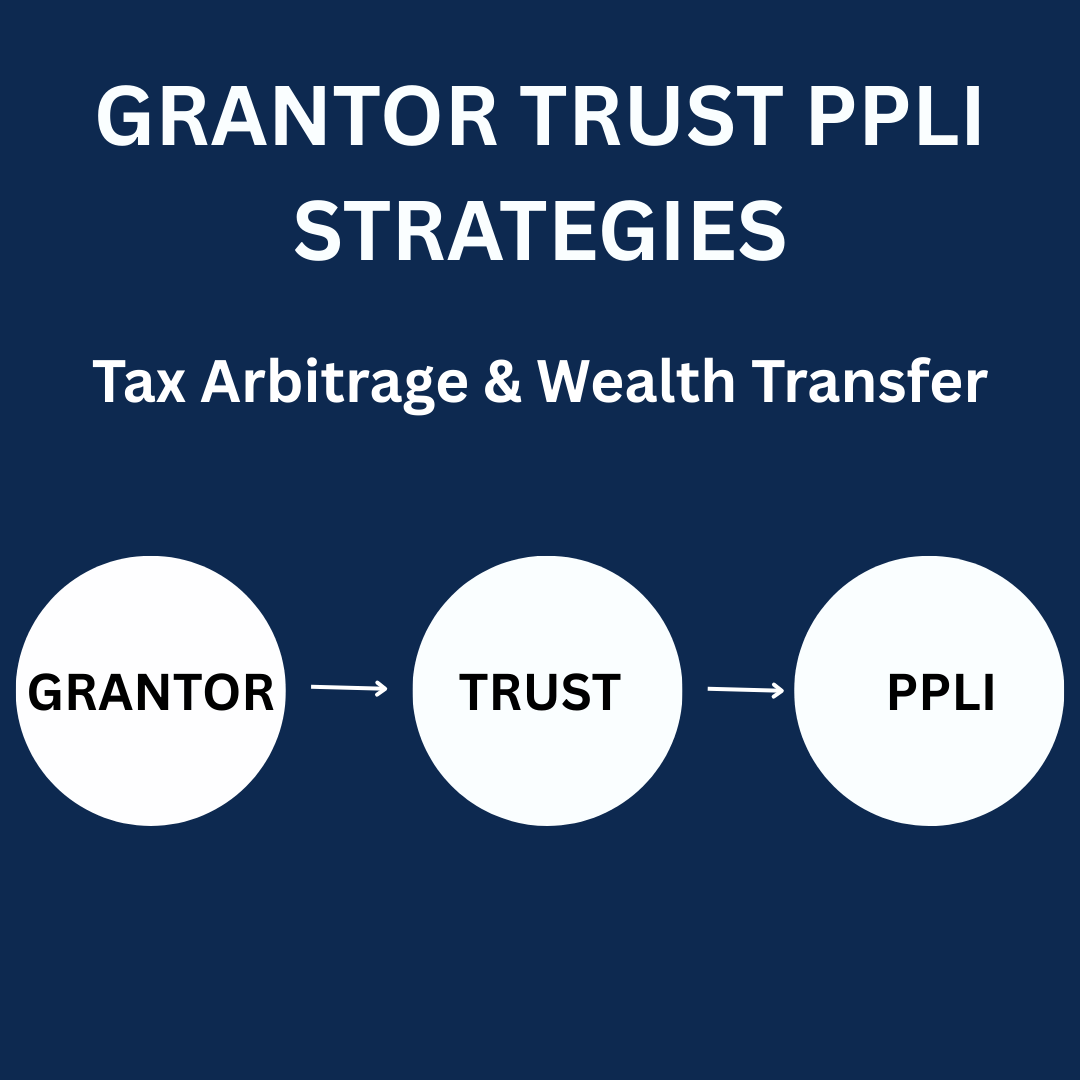
Grantor Trust PPLI strategies diagram showing tax arbitrage and wealth transfer flow from grantor through trust to private placement life insurance policy

Private placement life insurance (PPLI) combined with grantor trust structures presents exceptional tax arbitrage opportunities for high-net-worth families seeking to maximize wealth transfer efficiency while minimizing tax liabilities. These integrated strategies allow grantor trusts to pay income taxes on PPLI policy growth while transferring the economic benefits to beneficiaries, creating powerful tax arbitrage scenarios. The strategic use of grantor trusts with private placement life insurance enables families to accelerate wealth transfer, reduce estate taxes, and optimize investment returns through careful tax planning and structure design.

Understanding the Grantor Trust and PPLI Integration

Grantor trusts represent a unique tax planning tool where the grantor retains certain powers or benefits that result in the trust’s income being taxed to the grantor rather than the trust or its beneficiaries. When combined with PPLI, these structures create a powerful tax arbitrage opportunity where the grantor pays taxes on policy growth that economically benefits the trust beneficiaries. This arrangement effectively allows the grantor to make additional tax-free gifts to the trust equal to the income taxes paid on the trust’s behalf.

The integration of private placement life insurance within grantor trust structures provides multiple layers of tax efficiency. The PPLI policy grows tax-deferred within the trust, while the grantor’s payment of income taxes on this growth represents an additional wealth transfer that does not consume gift tax exemptions. This creates a multiplicative effect where both the policy growth and the tax payments contribute to the beneficiaries’ ultimate inheritance while reducing the grantor’s taxable estate.

Tax Arbitrage Mechanics in PPLI Grantor Trust Structures

The fundamental tax arbitrage opportunity in PPLI grantor trust arrangements stems from the ability to shift economic benefits while maintaining tax obligations with the grantor. When a grantor trust owns a private placement life insurance policy, the grantor remains responsible for income taxes on the policy’s deemed income, even though the economic benefits accrue to the trust beneficiaries. This creates a scenario where the grantor effectively makes ongoing tax-free gifts equal to the tax obligations.

The arbitrage becomes particularly powerful when considering the time value of money and the compounding effect of these tax payments over extended periods. Each tax payment represents an additional gift that does not count against annual exclusion limits or lifetime exemption amounts. Over time, these cumulative tax payments can represent substantial additional wealth transfers that would otherwise require the use of gift tax exemptions or result in gift tax liabilities.

Estate Tax Benefits and Wealth Transfer Efficiency

Grantor trust strategies with PPLI provide significant estate tax advantages by removing both the policy death benefit and the value of tax payments from the grantor’s taxable estate. The life insurance death benefit passes to trust beneficiaries free from estate taxation, while the cumulative value of income tax payments made by the grantor represents additional wealth transfer that would otherwise remain in the grantor’s estate. This dual benefit creates substantial estate tax savings over time.

The wealth transfer efficiency of these structures increases with the grantor’s tax rate and the length of time the arrangement remains in place. Higher tax rates result in larger tax payments and greater additional wealth transfer, while longer time periods allow for more cumulative tax payments and greater compounding benefits. The estate tax savings from removing these amounts from the grantor’s estate can be substantial, particularly for families subject to the highest marginal estate tax rates.

Have Questions?

Contact us by filling the form, and we’ll get back to you soon!

Contact Us

Generation-Skipping Transfer Tax Planning

Private placement life insurance within grantor trust structures provides exceptional opportunities for generation-skipping transfer tax (GST) planning by allowing families to leverage their GST exemption while continuing to receive tax benefits through grantor status. When PPLI policies are held in grantor trusts that qualify for GST exemption, the death benefits and accumulated tax payments can pass to multiple generations without additional transfer tax consequences.

The GST tax benefits become particularly valuable when combined with the long-term growth potential of PPLI policies and the cumulative value of grantor tax payments. These arrangements allow families to establish perpetual wealth transfer structures that can benefit multiple generations while maintaining the grantor’s tax obligations during their lifetime. The interaction between GST exemption allocation and grantor trust status creates opportunities for highly efficient multi-generational wealth transfer.

Income Tax Considerations and Planning Opportunities

The income tax treatment of PPLI within grantor trusts requires careful attention to ensure optimal tax outcomes while maintaining the desired trust structure. Grantor trust status ensures that policy growth and distributions are taxed to the grantor rather than the trust, preventing the imposition of compressed trust tax rates on policy income. This treatment is particularly beneficial when the grantor has lower marginal tax rates than the trust would face or when policy distributions can be timed to optimize overall tax efficiency.

Strategic planning around income recognition and distribution timing can enhance the tax benefits of PPLI grantor trust arrangements. The ability to control when and how policy distributions are made provides opportunities to optimize the grantor’s tax situation while maximizing the economic benefits to trust beneficiaries. These planning opportunities become more valuable as policy values grow and distribution options become more diverse.

Investment Flexibility and Asset Protection Benefits

The combination of grantor trusts and PPLI provides enhanced investment flexibility while maintaining asset protection benefits that are valuable for high-net-worth families. Private placement life insurance policies allow access to institutional-class investment strategies that may not be available through traditional trust investments, while the grantor trust structure provides additional planning flexibility around tax management and distribution strategies.

Asset protection benefits arise from both the life insurance structure and the trust arrangement, creating multiple layers of protection for policy assets. The creditor protection available through properly structured life insurance policies combines with the asset protection features of well-designed trust structures to provide comprehensive protection for family wealth. These benefits become increasingly valuable as policy values grow and family circumstances change over time.

Valuation Advantages and Gift Tax Efficiency

PPLI policies within grantor trust structures can provide valuation advantages for gift and estate tax purposes, particularly when policies are contributed to trusts at inception or during early policy years. The ability to transfer policies at values below their ultimate potential can create additional tax arbitrage opportunities through valuation discounts and the leveraged growth of gifted amounts.

Gift tax efficiency extends beyond initial policy transfers to include ongoing premium payments and the value of grantor tax obligations. Each element of the structure provides opportunities to transfer wealth without consuming gift tax exemptions or triggering additional transfer tax liabilities. The cumulative effect of these efficiencies can result in substantial tax savings over the life of the arrangement.

Administrative Considerations and Ongoing Management

Successful implementation of grantor trust strategies with PPLI requires careful attention to administrative details and ongoing management requirements. The coordination between trust administration, policy management, and tax compliance creates multiple touchpoints that require professional oversight and regular review. Proper documentation and record-keeping are essential to maintain the tax benefits and ensure compliance with applicable regulations.

Regular review and adjustment of these structures is necessary to maintain their effectiveness as tax laws change and family circumstances evolve. The flexibility inherent in both grantor trust arrangements and PPLI policies allows for modifications over time, but these changes must be implemented carefully to preserve the intended tax benefits and avoid unintended consequences.

Best Practices for Implementation

Effective implementation of grantor trust strategies with PPLI requires coordination among experienced tax, legal, and insurance professionals who understand the nuances of these integrated structures. Early planning and careful structure design are essential to ensure that all elements work together to achieve the intended tax and wealth transfer objectives. The timing of implementation can significantly impact the overall effectiveness of these arrangements.

Ongoing communication among all professional advisors is crucial to ensure that changes in one area of the structure do not negatively impact other elements. Regular review of tax law changes, family circumstances, and policy performance helps maintain the effectiveness of these arrangements over time and identifies opportunities for optimization or adjustment.

Conclusion

Grantor trust strategies with PPLI offer powerful tax arbitrage opportunities for families seeking to maximize wealth transfer efficiency while minimizing transfer tax liabilities. The integration of private placement life insurance with grantor trust structures creates multiple layers of tax benefits that can result in substantial savings over time. These arrangements require careful planning and ongoing professional management, but the potential benefits justify the additional attention and cost for appropriate families.

The tax arbitrage opportunities available through these structures continue to make them valuable planning tools for high-net-worth families, despite ongoing changes in tax legislation and regulations. As wealth transfer planning becomes increasingly important for affluent families, grantor trust strategies with PPLI provide a tested and effective approach to achieving tax-efficient wealth transfer objectives.

Ready to Explore Grantor Trust PPLI Strategies?

Book a Call
Rajiv Rebello

Rajiv Rebello

Author

Rajiv Rebello, FSA, CERA is the Principal and Chief Actuary of Colva Insurance Services. Colva helps family offices, RIAs, and high net worth individuals create better after-tax and risk-adjusted portfolio solutions through the use of life insurance vehicles and low-correlation alternative assets. He can be reached at [email protected].

Keep Reading

Hedge Fund Investments in PPLI: Benefits, Risks, and Due Diligence for PPLI Strategies

Hedge Fund Investments in PPLI: Benefits, Risks, and Due Diligence for PPLI Strategies

Hedge Fund Investments in PPLI: Benefits, Risks, and Due Diligence for Private Placement Life Insurance Strategies

Private placement life insurance (PPLI) has become an increasingly popular vehicle for high-net-worth individuals seeking to combine life insurance benefits with alternative investment strategies. Among the various investment options available within PPLI structures, hedge fund investments offer unique opportunities for portfolio diversification and enhanced returns. Understanding the benefits, risks, and due diligence requirements of hedge fund investments in private placement life insurance is essential for making informed decisions about this wealth management strategy.

## Understanding Hedge Fund Integration in PPLI Structures

Hedge fund investments within PPLI policies operate through carefully structured arrangements that maintain the insurance wrapper’s tax advantages while providing access to alternative investment strategies. These investments typically occur through dedicated funds or separately managed accounts designed specifically for insurance company separate accounts, ensuring compliance with regulatory requirements governing private placement life insurance.

The structure allows policyholders to access hedge fund strategies that might otherwise be unavailable or less tax-efficient in direct investment formats. Insurance companies work with established hedge fund managers to create insurance-dedicated versions of their strategies, often with modified fee structures and enhanced liquidity provisions tailored to the insurance environment.

PPLI hedge fund investments can encompass various strategies including long-short equity, event-driven approaches, relative value strategies, and macro trading. The insurance wrapper provides a tax-deferred growth environment where hedge fund returns can compound without immediate tax consequences, potentially enhancing long-term wealth accumulation compared to direct hedge fund investments.

## Tax Advantages and Wealth Preservation Benefits

The primary benefit of hedge fund investments within PPLI lies in the tax treatment of returns generated by these strategies. Traditional hedge fund investments typically generate significant taxable income through short-term capital gains, dividend income, and interest income, all of which are taxed at ordinary income rates. Within the PPLI structure, these returns accumulate tax-deferred, allowing for more efficient compound growth over time.

Estate planning benefits represent another significant advantage of hedge fund PPLI investments. The death benefit proceeds pass to beneficiaries income tax-free, effectively transferring hedge fund returns without the tax burden that would apply to direct hedge fund investments. This feature proves particularly valuable for families seeking to transfer wealth generated by alternative investment strategies to future generations.

The ability to access policy values through loans without triggering taxable events provides additional flexibility compared to direct hedge fund investments. Policyholders can access liquidity based on their hedge fund investment performance without the immediate tax consequences associated with hedge fund withdrawals or redemptions.

## Enhanced Diversification and Return Potential

Hedge fund strategies within PPLI offer portfolio diversification benefits that extend beyond traditional stock and bond investments. Market-neutral strategies, for example, can provide returns with low correlation to equity markets, helping to reduce overall portfolio volatility while maintaining growth potential.

Alternative risk premia strategies accessible through PPLI hedge fund investments can capture returns from various market inefficiencies and behavioral biases. These strategies often provide steady returns with different risk characteristics than traditional investments, contributing to more balanced portfolio performance across various market conditions.

The ability to combine multiple hedge fund strategies within a single PPLI policy creates opportunities for further diversification. Policyholders can allocate among different hedge fund managers and strategies, creating a fund-of-funds approach within the insurance wrapper while maintaining the tax benefits of the PPLI structure.

## Liquidity Considerations and Management

Hedge fund investments traditionally involve lock-up periods and limited redemption windows that can restrict investor access to capital. PPLI structures often negotiate enhanced liquidity provisions with hedge fund managers, including shorter lock-up periods, more frequent redemption opportunities, or side-pocket arrangements for illiquid investments.

Policy loan features provide additional liquidity options that bypass traditional hedge fund redemption restrictions. Policyholders can borrow against their policy values, including those supported by hedge fund investments, without triggering hedge fund redemptions or violating lock-up provisions.

The insurance company’s role in managing hedge fund redemptions within PPLI policies helps coordinate liquidity needs across multiple policyholders. This pooling effect can sometimes provide better redemption terms than individual investors might achieve in direct hedge fund investments.

## Risk Assessment and Management Strategies

Hedge fund investments within PPLI carry specific risks that require careful evaluation and ongoing monitoring. Manager risk represents a primary concern, as hedge fund strategies often depend heavily on the skill and discipline of individual portfolio managers. Due diligence must focus on manager track records, investment processes, and risk management capabilities.

Operational risk assessment becomes critical when evaluating hedge fund managers for PPLI investments. The insurance wrapper adds additional operational complexity, requiring hedge fund managers to maintain proper reporting, compliance, and administrative capabilities to support insurance company requirements.

Concentration risk can emerge when PPLI policies become heavily weighted toward hedge fund investments or specific hedge fund strategies. Diversification across multiple managers, strategies, and asset classes helps mitigate this risk while maintaining the benefits of alternative investment exposure.

## Due Diligence Framework for Hedge Fund Selection

Effective due diligence for hedge fund investments in PPLI requires analysis of both investment merits and insurance-specific considerations. Investment due diligence should evaluate the hedge fund manager’s investment philosophy, process consistency, and historical performance across different market cycles.

Operational due diligence must assess the hedge fund manager’s ability to operate within the insurance environment, including reporting capabilities, compliance infrastructure, and experience with insurance company separate accounts. The manager’s willingness to modify fee structures or provide enhanced liquidity for insurance applications represents important considerations.

Third-party due diligence resources, including hedge fund research platforms and specialized consultants, can provide valuable insights into manager capabilities and operational strengths. Insurance companies often maintain preferred manager lists based on their own due diligence processes, providing additional filtering for PPLI hedge fund investments.

## Fee Structure Analysis and Cost Management

Hedge fund investments within PPLI typically involve multiple fee layers that require careful analysis to understand total investment costs. Management fees and performance fees charged by hedge fund managers represent the primary investment costs, often following traditional “2 and 20” structures or variations thereof.

Insurance company charges add additional costs to hedge fund PPLI investments, including mortality and expense charges, administrative fees, and surrender charges. Understanding the interaction between hedge fund fees and insurance charges helps evaluate the total cost of accessing hedge fund strategies through PPLI.

Fee negotiations for hedge fund investments in PPLI sometimes result in reduced costs compared to direct hedge fund investments. The pooled nature of insurance company separate accounts and long-term investment horizons can provide leverage for better fee arrangements with hedge fund managers.

## Performance Monitoring and Reporting

Hedge fund investments within PPLI require specialized monitoring and reporting capabilities to track performance and ensure alignment with investment objectives. Monthly performance reporting should include both gross and net returns, attribution analysis, and risk metrics specific to the hedge fund strategy employed.

Benchmark comparisons become important for evaluating hedge fund performance within PPLI, though appropriate benchmarks vary by strategy type. Hedge fund indices, peer group comparisons, and risk-adjusted performance measures help assess whether hedge fund investments are delivering expected value within the insurance wrapper.

Regular portfolio reviews should evaluate the ongoing suitability of hedge fund investments within the broader PPLI policy structure. Changes in market conditions, investment objectives, or hedge fund manager capabilities may necessitate adjustments to hedge fund allocations or manager selections.

## Regulatory Compliance and Reporting Requirements

Hedge fund investments within PPLI must comply with various regulatory requirements governing both insurance products and alternative investments. Investor control restrictions ensure that policyholders maintain appropriate distance from investment decisions to preserve favorable tax treatment under private placement life insurance regulations.

Anti-money laundering and know-your-customer requirements apply to hedge fund investments within PPLI, requiring proper documentation and ongoing monitoring of beneficial ownership and source of funds. These requirements may be more stringent than direct hedge fund investments due to the insurance wrapper.

Tax reporting for hedge fund investments within PPLI occurs at the insurance company level, simplifying tax compliance for policyholders while maintaining transparency regarding underlying investment performance and tax characteristics.

## Integration with Overall Wealth Management Strategy

Hedge fund investments within PPLI should align with broader wealth management and estate planning objectives rather than serving as isolated investment decisions. The insurance death benefit, tax deferral features, and liquidity options must work together to support overall financial goals.

Coordination with other investment accounts helps optimize asset location and tax efficiency across the entire investment portfolio. Hedge fund strategies within PPLI may complement traditional investments held in taxable accounts or retirement plans, providing diversification benefits while maximizing tax efficiency.

Regular strategy reviews ensure that hedge fund investments within PPLI continue to serve their intended purpose as circumstances change. Market conditions, tax law modifications, or personal financial situations may affect the optimal allocation to hedge fund strategies within the insurance wrapper.

## Future Considerations and Market Developments

The hedge fund industry continues to develop new strategies and approaches that may become available within PPLI structures. Emerging areas such as digital assets, ESG-focused strategies, and quantitative approaches may offer additional opportunities for PPLI hedge fund investments.

Regulatory developments affecting either hedge funds or private placement life insurance may impact the attractiveness or structure of these investments. Staying informed about regulatory changes helps ensure continued compliance and optimal strategy implementation.

Technology improvements in hedge fund operations and insurance administration may enhance the efficiency and cost-effectiveness of hedge fund investments within PPLI. These developments could expand access to hedge fund strategies or improve the overall economics of combining hedge funds with insurance wrappers.

Hedge fund investments within private placement life insurance represent a powerful tool for wealth accumulation and estate planning when properly implemented and managed. The combination of tax advantages, diversification benefits, and professional management creates opportunities for enhanced long-term wealth creation. However, success requires careful due diligence, ongoing monitoring, and integration with broader wealth management strategies. By understanding the benefits, risks, and requirements of hedge fund PPLI investments, high-net-worth individuals can make informed decisions about incorporating these strategies into their overall financial plans.

Comments

0 Comments

Submit a Comment

Your email address will not be published. Required fields are marked *

By Commenting, I agree to the Terms and Conditions and Privacy Policy