Guide to Implementing a PPLI Strategy

Rajiv Rebello
Author
March 20, 2025

Author
Private Placement Life Insurance (PPLI) offers a powerful wealth management solution for high-net-worth individuals seeking tax efficiency and asset protection. This customizable insurance vehicle combines the tax benefits of life insurance with investment flexibility, making it an attractive option for those looking to optimize their financial planning. While traditional life insurance products are available to the general public, PPLI is specifically designed for accredited investors who meet certain financial requirements.
PPLI is a variable universal life insurance policy that allows policyholders to invest in a wide range of alternative investments while providing the tax advantages of life insurance. Unlike retail insurance products, PPLI policies are privately negotiated between the insurance company and the policyholder, allowing for greater customization. The policy consists of two main components: a life insurance death benefit and a cash value investment account. The cash value grows tax-deferred, and when structured properly, withdrawals can be taken tax-free.
Implementing a PPLI strategy offers several key advantages. First, investment gains within the policy grow tax-deferred, meaning no immediate tax liability on dividends, interest, or capital gains. Second, policyholders can access funds through tax-free policy loans and withdrawals up to the basis. Third, beneficiaries receive the death benefit income tax-free. Additionally, PPLI provides asset protection from creditors in many jurisdictions and allows investment in a variety of alternative assets that might otherwise generate significant tax liabilities.
Before implementing a PPLI strategy, consider these factors. PPLI is most beneficial for individuals with significant investable assets (typically $5 million or more) who plan to maintain the policy long-term. You should have a need for life insurance and intend to invest in tax-inefficient assets that generate ordinary income or short-term capital gains. PPLI works best for those in high tax brackets who have already maximized other tax-advantaged investment vehicles. Consult with financial advisors, tax professionals, and insurance specialists to determine if PPLI aligns with your overall wealth management goals.
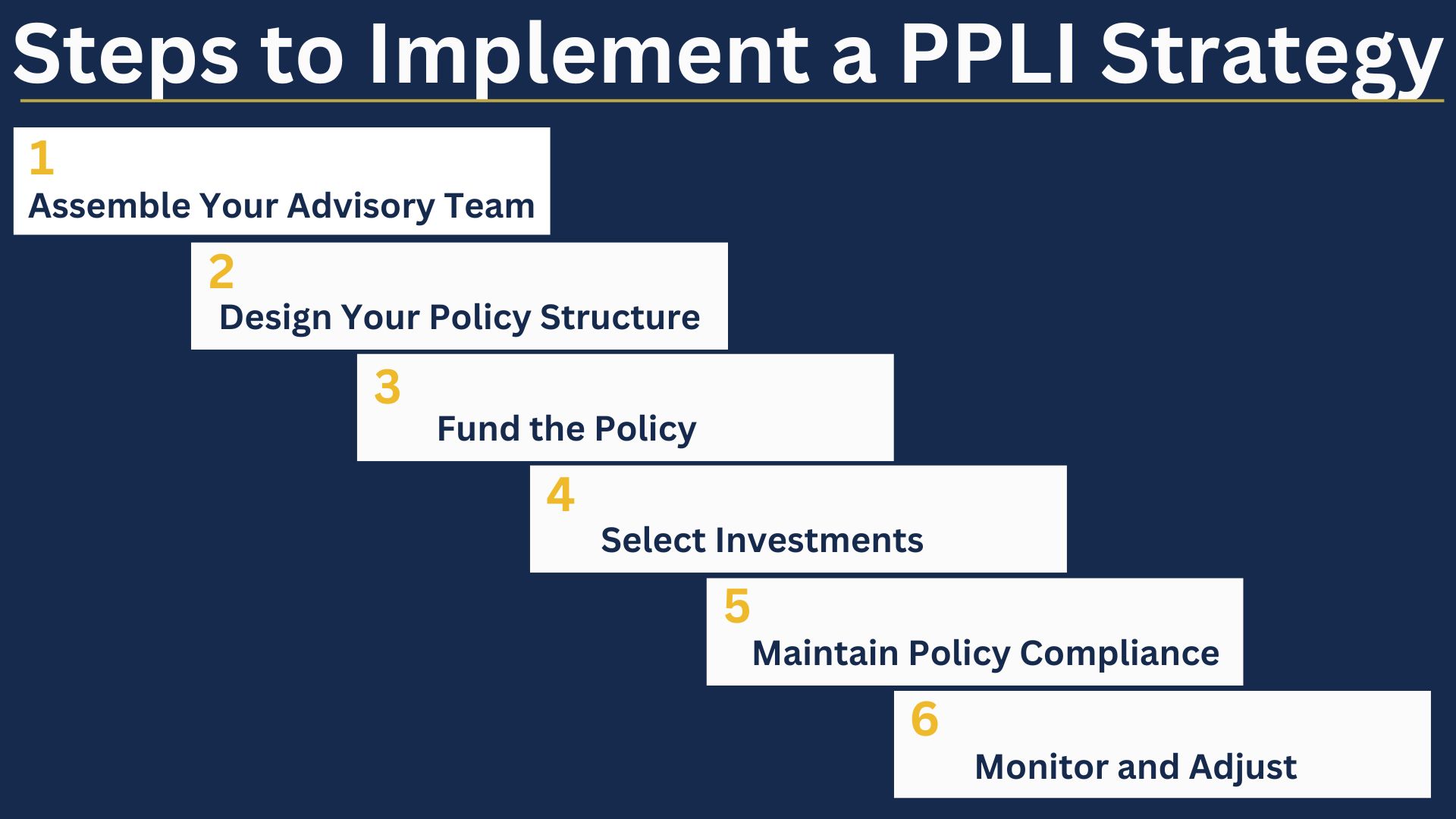
Start by gathering experienced professionals who understand PPLI. Your team should include a wealth advisor, tax attorney, insurance specialist familiar with PPLI, and potentially an investment advisor who can help select appropriate investments for the policy. This multidisciplinary approach ensures all aspects of your PPLI strategy align with your overall financial plan.
Work with your advisory team to determine the optimal policy structure. Decide on the death benefit amount, premium payment schedule, and investment strategy. The policy must meet the IRS definition of life insurance and comply with relevant tax regulations, including the modified endowment contract (MEC) rules and diversification requirements. Your advisors will help balance the insurance component with the investment aspect to maximize benefits.
Fund your PPLI policy according to the premium payment schedule established in your policy design. Premium payments can be made in a lump sum or spread over several years, depending on your financial situation and the policy structure. Remember that premiums for PPLI policies typically start at $1 million or more, though some carriers accept lower amounts.
Choose investments for your policy’s cash value that align with your overall investment strategy. PPLI works particularly well with tax-inefficient investments like hedge funds, private equity, high-yield fixed income, and actively managed portfolios. Your investment advisor should help select options that would otherwise generate significant tax liabilities outside the PPLI structure.
Ensure ongoing compliance with IRS regulations to maintain the tax-advantaged status of your PPLI policy. This includes adhering to the investor control doctrine, which prohibits too much policyholder influence over specific investments. Your policy must also continue to meet the definition of life insurance under Section 7702 of the Internal Revenue Code and satisfy diversification requirements under Section 817(h).
Regularly review your PPLI policy with your advisory team. Assess performance, make necessary investment changes, and ensure the policy continues to align with your evolving financial goals. Adjustments might be needed as tax laws change or as your personal circumstances evolve.
When implementing a PPLI strategy, be aware of potential pitfalls. Avoid excessive control over investment decisions, which could violate the investor control doctrine and jeopardize tax benefits. Ensure proper policy funding to prevent lapse or classification as a modified endowment contract, which would limit tax advantages. Work with experienced advisors to navigate the technical requirements and regulatory considerations.
Private Placement Life Insurance offers a valuable wealth management tool for high-net-worth individuals seeking tax efficiency and investment flexibility. By following these steps and working with knowledgeable advisors, you can implement a PPLI strategy that enhances your overall financial plan. The combination of tax-deferred growth, tax-free access to funds, and estate planning benefits makes PPLI worth considering as part of a comprehensive wealth management approach.
Need information about implementing a PPLI strategy tailored to your specific needs? We help clients navigate the intricacies of Private Placement Life Insurance to maximize wealth preservation and growth.
Book a CallAuthor

Discover how Private Placement Life Insurance transforms charitable remainder trust strategies into powerful wealth replacement tools. Learn tax-efficient approaches that maximize charitable benefits while preserving family wealth for high-net-worth families.

This blog post explores essential PPLI due diligence steps, covering carrier evaluation, regulatory considerations, investment platforms, tax compliance, and advisor expertise to help high-net-worth individuals make informed decisions before implementing this specialized insurance solution.

Discover how PPLI enhances business succession planning through key person insurance and buy-sell funding. Learn private placement life insurance strategies for business owners.
0 Comments