Understanding MEC vs Non-MEC Status in PPLI Policies
Rajiv Rebello
Author
January 28, 2025

Navigating Modified Endowment Contract Rules in Private Placement Life Insurance
Introduction to MEC Status
Private Placement Life Insurance (PPLI) policies face a crucial distinction between Modified Endowment Contract (MEC) and non-MEC status. This classification significantly impacts the tax treatment and flexibility of policy distributions. Understanding the differences between these designations is essential for proper policy design and long-term planning success.
Defining Modified Endowment Contracts
A Modified Endowment Contract occurs when a life insurance policy, including PPLI, receives premium payments exceeding certain limits established by the Internal Revenue Code. Specifically, the seven-pay test determines MEC status by comparing actual premium payments to the maximum amount that would be needed to fully fund the policy over seven years. Once a policy becomes a MEC, it permanently retains this status, affecting its tax treatment and distribution options.
Non-MEC Policy Benefits
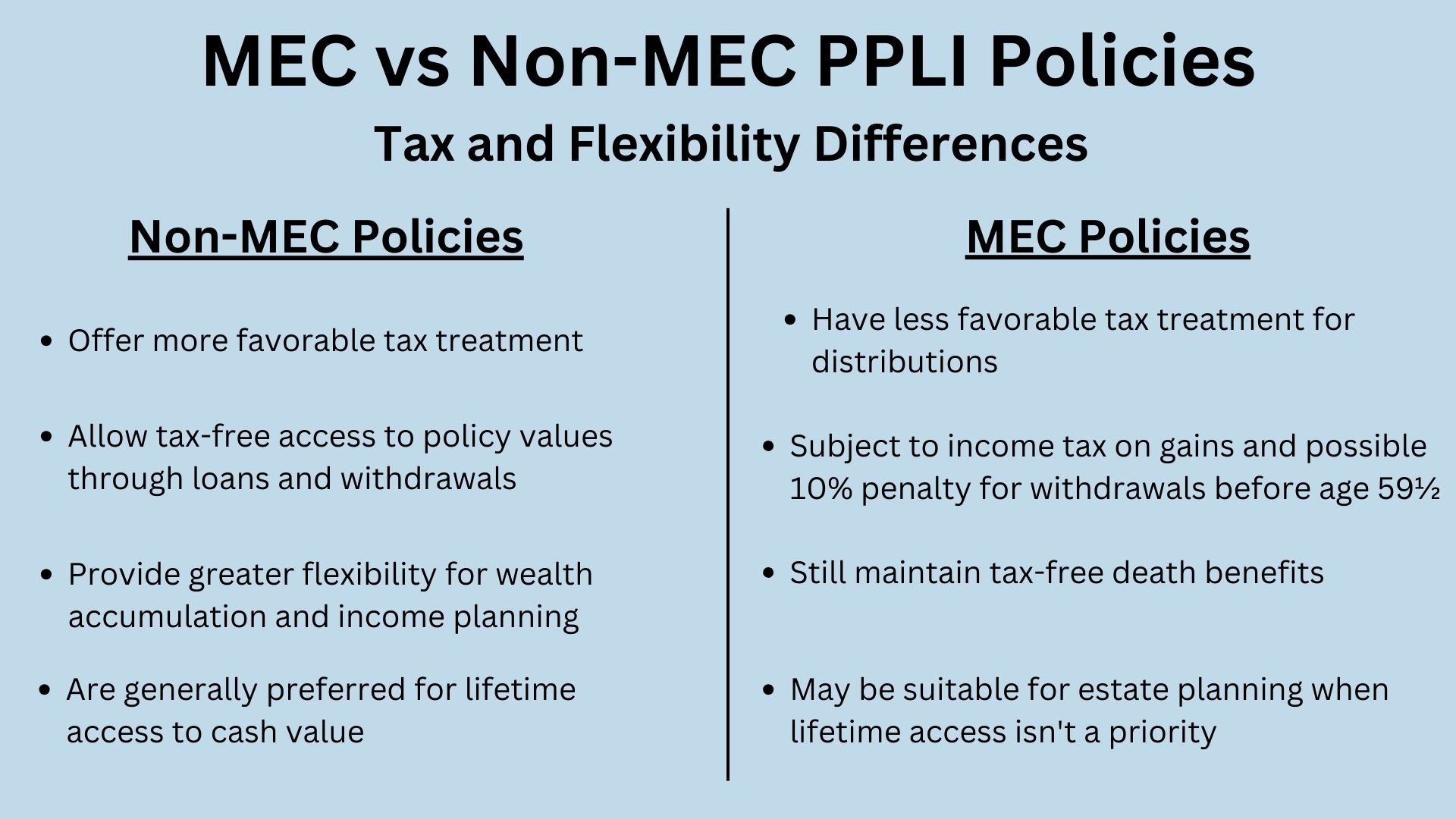
Non-MEC PPLI policies offer significant tax advantages and flexibility. Policy loans and withdrawals can be structured to provide tax-free access to policy values, as long as the policy remains in force and complies with other requirements. This tax-efficient access to cash value makes non-MEC status particularly attractive for wealth accumulation and income planning strategies. The ability to access policy values without triggering taxable events provides valuable planning flexibility.
MEC Policy Implications
When a PPLI policy becomes a MEC, it faces less favorable tax treatment for distributions. Policy loans and withdrawals from MECs are subject to income tax on the gain portion and may incur a 10% penalty if taken before age 59½. However, the death benefit remains tax-free to beneficiaries, maintaining one of the primary advantages of life insurance. Understanding these implications is crucial for policy design decisions.
Seven-Pay Test Mechanics
The seven-pay test serves as the primary determinant of MEC status. This test calculates the maximum amount of premium that can be paid into the policy during the first seven years while maintaining non-MEC status. The calculation considers factors such as the death benefit, insured’s age, and policy features. Careful monitoring of premium payments against this limit is essential for maintaining desired policy status.
Have Questions?
Contact us by filling the form, and we’ll get back to you soon!
Changes to PPLI policies, such as death benefit adjustments or material changes to policy terms, can trigger new seven-pay test periods. Understanding how policy modifications impact MEC testing helps prevent unintended MEC conversion. Careful consideration of timing and impact of policy changes is essential for maintaining desired status.
Tax Planning Considerations
The choice between MEC and non-MEC status should align with overall tax planning objectives. While non-MEC status typically offers greater flexibility, MEC status may be acceptable or even preferable in certain situations, such as estate planning focused strategies where lifetime access to cash value is not a priority. Understanding the tax implications of each status helps inform optimal policy design.
Investment Strategy Impact
MEC status can influence investment strategy decisions within PPLI policies. Non-MEC policies may favor strategies generating long-term appreciation, while MEC policies might focus more on estate planning objectives or pure investment returns without concern for distribution tax efficiency. The policy’s status should inform investment choices and portfolio construction.
Distribution Planning Strategies
Effective distribution planning requires understanding how MEC status affects access to policy values. Non-MEC policies offer greater flexibility for tax-efficient distributions through loans and withdrawals, while MEC distributions require careful planning to manage tax implications. Distribution strategies should align with policy status and overall planning objectives.
Compliance Monitoring Requirements
Maintaining desired MEC status requires ongoing monitoring and compliance procedures. Regular review of premium payments, policy modifications, and other factors affecting MEC status helps prevent unintended status changes. Establishing clear monitoring procedures ensures long-term policy success.
Estate Planning Integration
Both MEC and non-MEC PPLI policies can play valuable roles in estate planning. The choice between status options should consider factors such as estate tax liquidity needs, wealth transfer objectives, and beneficiary planning goals. Integration with broader estate planning strategy helps optimize policy design decisions.
Conclusion
Understanding the distinctions between MEC and non-MEC status is crucial forsuccessful PPLI policy implementation.While non-MEC status typically offers greater flexibility for lifetime access to policy values, both structures can serve valuable planning purposes when properly designed and implemented. Success requires careful consideration of planning objectives, premium payment design, and ongoing monitoring to maintain desired policy status. Working with experienced professionals who understand both the technical requirements and practical implications of MEC status helps ensure optimal policy design and implementation.
Contact us to navigate the complexities of MEC and non-MEC status, ensuring your PPLI policy is strategically designed and optimized to meet your unique financial objectives.
Rajiv Rebello, FSA, CERA is the Principal and Chief Actuary of Colva Insurance Services. Colva helps family offices, RIAs, and high net worth individuals create better after-tax and risk-adjusted portfolio solutions through the use of life insurance vehicles and low-correlation alternative assets. He can be reached at [email protected].
Hedge Fund Investments in PPLI: Benefits, Risks, and Due Diligence for Private Placement Life Insurance Strategies
Private placement life insurance (PPLI) has become an increasingly popular vehicle for high-net-worth individuals seeking to combine life insurance benefits with alternative investment strategies. Among the various investment options available within PPLI structures, hedge fund investments offer unique opportunities for portfolio diversification and enhanced returns. Understanding the benefits, risks, and due diligence requirements of hedge fund investments in private placement life insurance is essential for making informed decisions about this wealth management strategy.
## Understanding Hedge Fund Integration in PPLI Structures
Hedge fund investments within PPLI policies operate through carefully structured arrangements that maintain the insurance wrapper’s tax advantages while providing access to alternative investment strategies. These investments typically occur through dedicated funds or separately managed accounts designed specifically for insurance company separate accounts, ensuring compliance with regulatory requirements governing private placement life insurance.
The structure allows policyholders to access hedge fund strategies that might otherwise be unavailable or less tax-efficient in direct investment formats. Insurance companies work with established hedge fund managers to create insurance-dedicated versions of their strategies, often with modified fee structures and enhanced liquidity provisions tailored to the insurance environment.
PPLI hedge fund investments can encompass various strategies including long-short equity, event-driven approaches, relative value strategies, and macro trading. The insurance wrapper provides a tax-deferred growth environment where hedge fund returns can compound without immediate tax consequences, potentially enhancing long-term wealth accumulation compared to direct hedge fund investments.
## Tax Advantages and Wealth Preservation Benefits
The primary benefit of hedge fund investments within PPLI lies in the tax treatment of returns generated by these strategies. Traditional hedge fund investments typically generate significant taxable income through short-term capital gains, dividend income, and interest income, all of which are taxed at ordinary income rates. Within the PPLI structure, these returns accumulate tax-deferred, allowing for more efficient compound growth over time.
Estate planning benefits represent another significant advantage of hedge fund PPLI investments. The death benefit proceeds pass to beneficiaries income tax-free, effectively transferring hedge fund returns without the tax burden that would apply to direct hedge fund investments. This feature proves particularly valuable for families seeking to transfer wealth generated by alternative investment strategies to future generations.
The ability to access policy values through loans without triggering taxable events provides additional flexibility compared to direct hedge fund investments. Policyholders can access liquidity based on their hedge fund investment performance without the immediate tax consequences associated with hedge fund withdrawals or redemptions.
## Enhanced Diversification and Return Potential
Hedge fund strategies within PPLI offer portfolio diversification benefits that extend beyond traditional stock and bond investments. Market-neutral strategies, for example, can provide returns with low correlation to equity markets, helping to reduce overall portfolio volatility while maintaining growth potential.
Alternative risk premia strategies accessible through PPLI hedge fund investments can capture returns from various market inefficiencies and behavioral biases. These strategies often provide steady returns with different risk characteristics than traditional investments, contributing to more balanced portfolio performance across various market conditions.
The ability to combine multiple hedge fund strategies within a single PPLI policy creates opportunities for further diversification. Policyholders can allocate among different hedge fund managers and strategies, creating a fund-of-funds approach within the insurance wrapper while maintaining the tax benefits of the PPLI structure.
## Liquidity Considerations and Management
Hedge fund investments traditionally involve lock-up periods and limited redemption windows that can restrict investor access to capital. PPLI structures often negotiate enhanced liquidity provisions with hedge fund managers, including shorter lock-up periods, more frequent redemption opportunities, or side-pocket arrangements for illiquid investments.
Policy loan features provide additional liquidity options that bypass traditional hedge fund redemption restrictions. Policyholders can borrow against their policy values, including those supported by hedge fund investments, without triggering hedge fund redemptions or violating lock-up provisions.
The insurance company’s role in managing hedge fund redemptions within PPLI policies helps coordinate liquidity needs across multiple policyholders. This pooling effect can sometimes provide better redemption terms than individual investors might achieve in direct hedge fund investments.
## Risk Assessment and Management Strategies
Hedge fund investments within PPLI carry specific risks that require careful evaluation and ongoing monitoring. Manager risk represents a primary concern, as hedge fund strategies often depend heavily on the skill and discipline of individual portfolio managers. Due diligence must focus on manager track records, investment processes, and risk management capabilities.
Operational risk assessment becomes critical when evaluating hedge fund managers for PPLI investments. The insurance wrapper adds additional operational complexity, requiring hedge fund managers to maintain proper reporting, compliance, and administrative capabilities to support insurance company requirements.
Concentration risk can emerge when PPLI policies become heavily weighted toward hedge fund investments or specific hedge fund strategies. Diversification across multiple managers, strategies, and asset classes helps mitigate this risk while maintaining the benefits of alternative investment exposure.
## Due Diligence Framework for Hedge Fund Selection
Effective due diligence for hedge fund investments in PPLI requires analysis of both investment merits and insurance-specific considerations. Investment due diligence should evaluate the hedge fund manager’s investment philosophy, process consistency, and historical performance across different market cycles.
Operational due diligence must assess the hedge fund manager’s ability to operate within the insurance environment, including reporting capabilities, compliance infrastructure, and experience with insurance company separate accounts. The manager’s willingness to modify fee structures or provide enhanced liquidity for insurance applications represents important considerations.
Third-party due diligence resources, including hedge fund research platforms and specialized consultants, can provide valuable insights into manager capabilities and operational strengths. Insurance companies often maintain preferred manager lists based on their own due diligence processes, providing additional filtering for PPLI hedge fund investments.
## Fee Structure Analysis and Cost Management
Hedge fund investments within PPLI typically involve multiple fee layers that require careful analysis to understand total investment costs. Management fees and performance fees charged by hedge fund managers represent the primary investment costs, often following traditional “2 and 20” structures or variations thereof.
Insurance company charges add additional costs to hedge fund PPLI investments, including mortality and expense charges, administrative fees, and surrender charges. Understanding the interaction between hedge fund fees and insurance charges helps evaluate the total cost of accessing hedge fund strategies through PPLI.
Fee negotiations for hedge fund investments in PPLI sometimes result in reduced costs compared to direct hedge fund investments. The pooled nature of insurance company separate accounts and long-term investment horizons can provide leverage for better fee arrangements with hedge fund managers.
## Performance Monitoring and Reporting
Hedge fund investments within PPLI require specialized monitoring and reporting capabilities to track performance and ensure alignment with investment objectives. Monthly performance reporting should include both gross and net returns, attribution analysis, and risk metrics specific to the hedge fund strategy employed.
Benchmark comparisons become important for evaluating hedge fund performance within PPLI, though appropriate benchmarks vary by strategy type. Hedge fund indices, peer group comparisons, and risk-adjusted performance measures help assess whether hedge fund investments are delivering expected value within the insurance wrapper.
Regular portfolio reviews should evaluate the ongoing suitability of hedge fund investments within the broader PPLI policy structure. Changes in market conditions, investment objectives, or hedge fund manager capabilities may necessitate adjustments to hedge fund allocations or manager selections.
## Regulatory Compliance and Reporting Requirements
Hedge fund investments within PPLI must comply with various regulatory requirements governing both insurance products and alternative investments. Investor control restrictions ensure that policyholders maintain appropriate distance from investment decisions to preserve favorable tax treatment under private placement life insurance regulations.
Anti-money laundering and know-your-customer requirements apply to hedge fund investments within PPLI, requiring proper documentation and ongoing monitoring of beneficial ownership and source of funds. These requirements may be more stringent than direct hedge fund investments due to the insurance wrapper.
Tax reporting for hedge fund investments within PPLI occurs at the insurance company level, simplifying tax compliance for policyholders while maintaining transparency regarding underlying investment performance and tax characteristics.
## Integration with Overall Wealth Management Strategy
Hedge fund investments within PPLI should align with broader wealth management and estate planning objectives rather than serving as isolated investment decisions. The insurance death benefit, tax deferral features, and liquidity options must work together to support overall financial goals.
Coordination with other investment accounts helps optimize asset location and tax efficiency across the entire investment portfolio. Hedge fund strategies within PPLI may complement traditional investments held in taxable accounts or retirement plans, providing diversification benefits while maximizing tax efficiency.
Regular strategy reviews ensure that hedge fund investments within PPLI continue to serve their intended purpose as circumstances change. Market conditions, tax law modifications, or personal financial situations may affect the optimal allocation to hedge fund strategies within the insurance wrapper.
## Future Considerations and Market Developments
The hedge fund industry continues to develop new strategies and approaches that may become available within PPLI structures. Emerging areas such as digital assets, ESG-focused strategies, and quantitative approaches may offer additional opportunities for PPLI hedge fund investments.
Regulatory developments affecting either hedge funds or private placement life insurance may impact the attractiveness or structure of these investments. Staying informed about regulatory changes helps ensure continued compliance and optimal strategy implementation.
Technology improvements in hedge fund operations and insurance administration may enhance the efficiency and cost-effectiveness of hedge fund investments within PPLI. These developments could expand access to hedge fund strategies or improve the overall economics of combining hedge funds with insurance wrappers.
Hedge fund investments within private placement life insurance represent a powerful tool for wealth accumulation and estate planning when properly implemented and managed. The combination of tax advantages, diversification benefits, and professional management creates opportunities for enhanced long-term wealth creation. However, success requires careful due diligence, ongoing monitoring, and integration with broader wealth management strategies. By understanding the benefits, risks, and requirements of hedge fund PPLI investments, high-net-worth individuals can make informed decisions about incorporating these strategies into their overall financial plans.
High-net-worth investors lose millions to annual tax bills that erode portfolio returns. Private placement life insurance (PPLI) eliminates this tax drag by allowing investments to grow tax-free, providing tax-free access through policy loans, and transferring wealth to heirs without income taxes—transforming lost tax payments into meaningful wealth accumulation.
0 Comments